Best Keyword Clustering Tools for SEO in 2026
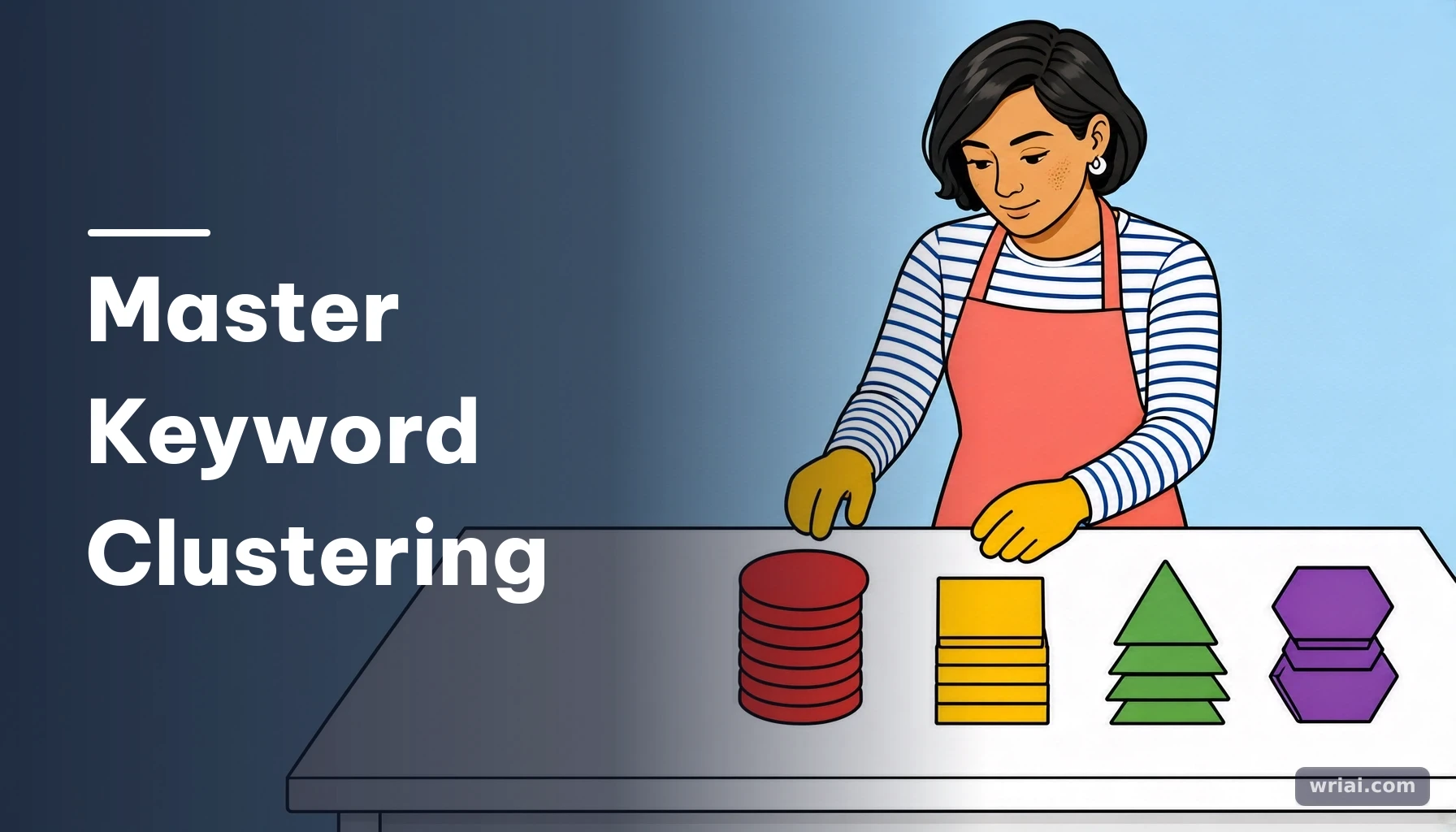
The best keyword clustering tools group search terms that can be served by the same page, helping you avoid thin, overlapping content and build a more useful site structure. The right choice depends on how it defines a cluster: shared wording, similar search results, or semantic similarity. For serious SEO work, compare its grouping method, validation options, large-list workflow, and publishing handoff—not just how many keywords it processes.
What keyword clustering tools do—and why the method matters
Keyword clustering tools organize related queries into groups that can inform pages, briefs, and content plans, while best practices for writing SEO content can help turn those plans into useful pages. The most useful clusters reflect shared search intent, not merely shared words; that distinction helps determine whether terms belong on one page or need separate coverage.
 Best Keyword Clustering Tools for SEO in 2026 - What keyword clustering tools do—and why the method matters
Lexical, SERP-based, and embedding-based clustering
Lexical clustering groups words by shared terms, stems, or lemmas. For example, “best running shoes,” “running shoes for beginners,” and “best shoes for running” may end up together because they share vocabulary. This method is quick and transparent, but can confuse wording similarity with intent: “running shoe repair” may not belong on a buying guide.
SERP-based clustering compares search results for query pairs. If the same pages rank for two terms, that overlap is evidence that a search engine may treat them as closely related. A common implementation compares the top ten results, but tools may use different thresholds, locations, devices, and data sources. Ask how the tool defines a match before comparing its output with another product.
Embedding-based clustering converts queries into numerical representations of meaning and groups queries that are semantically similar. It can connect terms with different wording, but semantic proximity alone does not prove that one page can satisfy both searches. A query about “how to fix a running shoe” can be semantically close to a product query while needing a different page.
Why a cluster is not automatically a content brief
A cluster is a research hypothesis, not a publishing instruction. Before assigning a group to a URL, check whether its terms share the same intent, expected format, audience, and level of detail. A set of queries may be related yet still require a comparison page, a product category, and a how-to article.
Review the live results for ambiguous or high-value groups. Look at the types of pages ranking, the questions they answer, and whether the results overlap substantially. Search results vary by market and over time, so a cluster should be treated as a point-in-time decision rather than a permanent fact.
What separates a useful tool from a keyword grouper
A useful tool makes its method understandable, lets you inspect or adjust clusters, and supports a practical handoff into your workflow. Consider whether it can handle your data volume, export query-to-cluster mappings, and preserve useful metrics such as search volume or ranking URLs.
Also assess the cost of review. A tool that creates thousands of opaque groups may be less useful than one that creates fewer, interpretable clusters your team can validate. For content teams, the final test is whether the output improves decisions: which page to create, which existing page to update, and which queries should remain separate.
Comparing keyword clustering tools and methods
Tools differ in what they cluster, what evidence they expose, and how easily teams can act on the results. The table below separates methodological strengths from product claims that require direct testing; vendor-specific accuracy, speed, and integrations should not be assumed without a current product demonstration or documentation.
 Best Keyword Clustering Tools for SEO in 2026 - Comparing keyword clustering tools and methods
Comparison table: methods and named solutions
| Tool or approach | Clustering basis to assess | SERP validation and accuracy checks | Large-list and publishing fit |
|---|---|---|---|
| Keyword Insights | Confirm which clustering modes and data sources are available in your plan. Assess whether grouping reflects SERP overlap, lexical similarity, or another method. | Test a sample of ambiguous terms against current results. Check whether the tool shows the evidence behind each cluster and permits review. | Verify how it handles your actual 10,000+ keyword file, export formats, and connections to your CMS or editorial workflow. |
| ClusterAI | Confirm its current grouping method and supported markets before relying on a cluster as a page recommendation. | Compare proposed groups with top-result overlap and manually inspect terms where intent may differ. | Benchmark a representative large file and check whether it supports direct CMS publishing or only an export/handoff. |
| Zenbrief | Check which input data and grouping logic it uses, and whether the output is intended for briefs, topic planning, or both. | Validate groups against search-result similarity and the page types that rank for the queries. | Confirm current limits, processing behavior, exports, and any publishing integrations with the vendor. |
| DataForSEO Keyword Grouping API | Evaluate the API as a programmatic grouping component; confirm available parameters and data requirements in current documentation. | Build your own acceptance checks, including top-ten URL overlap where data is available. An API grouping alone is not proof of shared intent. | Potentially suitable for custom pipelines; test throughput, rate limits, response structure, and the work required to connect results to your CMS. |
| Wriai Topic Cluster tool | Wriai lists a Topic Cluster tool for automated topical mapping and content clustering. Confirm its current inputs and grouping behavior for your use case. | Review sample clusters, compare overlapping search results, and check whether the workflow exposes enough detail for editorial validation. | Wriai describes automated publishing as a platform capability. Confirm the exact connection and workflow needed for your CMS and cluster output. |
| Lexical clustering | Shared terms, stems, or lemmas. Fast and interpretable, but vulnerable to false groupings based on wording alone. | No inherent SERP validation; add a separate results check for intent-sensitive decisions. | Easy to run at scale, but requires review and a separate content-planning or publishing process. |
| SERP-based clustering | Similarity between ranking URLs for query pairs or groups. Often useful for estimating whether one page can target multiple terms. | Inspect the overlap threshold, result depth, location, and freshness. A top-ten match is a signal, not a guarantee. | Processing depends on data access and implementation. Publishing still requires a content system or integration. |
| Embedding-based clustering | Semantic similarity in vector space. Can connect synonyms and differently worded queries. | Validate against search results and intent; semantic similarity may combine queries needing different page types. | Scale depends on implementation. Exports and CMS workflows are separate capabilities unless explicitly supported. |
How to judge accuracy, speed, and integrations
There is no universal clustering-accuracy score that makes tools directly comparable. Create a labeled test set from your own niche: include clear synonyms, terms with different intent but similar wording, and semantically related queries that should remain separate. Have an experienced reviewer assign expected groups, then compare each tool’s output with that reference.
For SERP validation, define the rule before testing. One practical check is to compare the top ten ranking URLs for two queries in the same market and record how many results overlap. Decide what overlap is meaningful for your project, then verify borderline pairs manually. Tools may differ in their search location, result freshness, and treatment of URL variants, so a raw score without those details can mislead.
For 10,000+ keywords, benchmark with the same file, settings, and output requirements. Record end-to-end time, not just processing time: upload, data retrieval, grouping, exports, and cleanup all affect delivery. For CMS publishing, distinguish between a tool that creates clusters, one that exports a plan, and one that can send approved content to a connected CMS. Those are different stages of a workflow.
From raw keywords to a 30-day content calendar
A dependable workflow turns keyword groups into validated page decisions before it assigns dates. Treat the cluster map as the start of planning: merge duplicates, inspect intent, map existing URLs, and prioritize work before scheduling production.
Step 1: Prepare and cluster the keyword set
Start with a clearly scoped list: one product area, audience, or topic family at a time. Normalize spelling and remove exact duplicates, but keep useful modifiers such as “for beginners,” “near me,” and “how to.” These can reveal meaningful differences in intent.
If your starting point is search suggestions, clustering is the immediate next step after harvesting them. This guide to bulk keyword discovery with Google Autocomplete APIs covers discovery; the resulting raw suggestions still need grouping and validation before they become page assignments. Add available metrics and current ranking URLs to your working file, preserving the original query for auditability.
Step 2: Validate clusters and map existing pages
For each proposed group, check whether the queries call for the same page type and answer the same underlying need. Compare relevant results, especially where a cluster combines informational and commercial terms. Split groups when the ranking pages or expected answers diverge; merge groups only when one page can satisfy both without becoming unfocused.
Next, map each cluster to an existing URL, a planned new page, or a decision to defer. Check for cannibalization risk: multiple URLs on your site may already target the same intent. A keyword tool can surface overlap, but choosing whether to consolidate, reposition, or keep separate pages requires reviewing their purpose and performance.
Step 3: Prioritize and schedule the month
Prioritize by business relevance, evidence of demand, current rankings, content readiness, and the effort needed to produce a strong page. Avoid treating search volume as a complete priority score: a smaller, highly relevant cluster may be more useful than a broad group with weak alignment to your audience.
Build the calendar around deliverables, not just titles. Include the target cluster, assigned URL, page type, brief owner, reviewer, internal links to add, and planned publication or update date. Reserve capacity for refreshing an existing page or validating early results rather than filling every slot with new content.
| Planning period | Work to schedule | Completion check |
|---|---|---|
| Days 1–3 | Clean the keyword list; remove duplicates; run initial clustering. | Source file and grouping method are documented. |
| Days 4–6 | Review intent and result overlap; split or merge questionable groups. | Each retained cluster has a clear page purpose. |
| Days 7–9 | Map groups to existing URLs or new-page candidates; flag cannibalization. | No assignment is made without checking relevant pages. |
| Days 10–12 | Prioritize work and define briefs, owners, and review steps. | The calendar reflects capacity and business relevance. |
| Days 13–20 | Draft, review, and optimize the first planned content batch. | Each draft answers the assigned intent and links to relevant pages. |
| Days 21–26 | Publish or update approved pages; complete internal links and distribution steps. | Live URLs and changes are recorded for follow-up. |
| Days 27–30 | Review indexing and early performance signals; identify needed fixes. | Next actions are documented; early movement is not mistaken for a final result. |
Pro tips, common mistakes, and real-world examples
The best results come from combining automated grouping with human review at the points where search intent changes. Use tools to reduce repetitive sorting, but keep editorial judgment over page purpose, consolidation, and publication.
A practical example: similar terms, different jobs
Imagine a list containing “best running shoes,” “running shoes for beginners,” “how to clean running shoes,” and “running shoe repair.” A lexical tool may group all four because of shared words. Yet a buyer’s guide, a beginner-focused buying page, a cleaning tutorial, and a repair service page may answer different needs.
SERP overlap can help test whether two buying queries belong together. Embeddings may identify “beginner running footwear” as related to “running shoes for beginners,” even with little exact-word overlap. Neither method should automatically decide the final page: inspect results, audience, and the detail each page needs. The goal is a defensible page map, not the largest possible cluster.
Mistakes that create weak clusters
Avoid these common errors:
- Using one method as ground truth. Lexical similarity, embeddings, and SERP overlap each provide different evidence.
- Clustering at the wrong level. A very broad topic can hide several distinct page intents; an overly narrow setup can create unnecessary pages.
- Ignoring existing URLs. A new article may duplicate a useful page rather than fill a gap.
- Treating volume as intent. Similar demand does not mean users want the same answer.
- Publishing every cluster. Some groups are better handled by a product page, a section on an existing guide, or no page at all.
- Skipping market settings. Search results can vary by location and context, so validation should reflect the audience you serve.
Make the process auditable
Keep a record of why a cluster was accepted, split, or deferred. A short note—such as “same buying intent; overlapping results” or “separate how-to intent; different page format”—helps another strategist review the decision and makes future updates easier.
Alex Vance’s practical rule is to review the outliers first: unusually broad clusters, groups mixing question and purchase terms, and queries assigned to pages that already rank for a competing intent. That is usually a more efficient use of expert review than rechecking every obvious synonym. Revisit the map when rankings, business priorities, or the search landscape change; do not assume the original grouping remains right indefinitely.
Choosing a tool for your workflow
A suitable tool depends on whether you need a one-time research aid, repeatable analysis, or a connected content lifecycle. Select by testing your own keywords and process, because tool features, limits, and integrations can change and should be verified directly.
For consultants and smaller teams
If you cluster keywords occasionally, prioritize clear exports, understandable grouping logic, and the ability to adjust results. A spreadsheet plus SERP checks may be adequate for a modest list, while a dedicated tool can reduce repetitive work. The important question is whether the output saves review time without hiding why terms were grouped.
For a small team, assign an owner to approve clusters before briefs are written. A lightweight review prevents a convenient export from becoming a content plan without checking existing pages, intent, and editorial capacity.
For agencies and high-volume sites
Agencies and large sites should test tools on representative files, not a tiny demo list. Include multiple markets, topic types, and ambiguous queries. Measure how often the output needs manual correction, how reliably it preserves metrics and URLs, and whether team members can reproduce the same workflow.
If automation is important, evaluate the complete path from data input to approved content. Wriai describes a workflow that includes topic clustering alongside research, content management, publishing, linking, indexing, distribution, and monitoring. That wider lifecycle may matter to teams seeking execution as well as keyword organization; verify the specific CMS connection and approval controls required before adopting it.
For developers building custom pipelines
An API can suit teams that need clustering inside an existing research or reporting system. Before implementation, confirm current documentation for inputs, outputs, data coverage, limits, and error handling. Then test the results against labeled examples and maintain a separate validation layer for intent and SERP overlap.
Do not assume an API response is a publishable content plan. Your pipeline may still need deduplication, URL mapping, priority rules, editorial review, and CMS integration. When comparing an API with a full workflow tool, include the engineering and maintenance work required to connect those steps.
FAQ
What is the most accurate type of keyword clustering?
There is no universally most accurate method. SERP-based clustering can provide evidence that search engines rank similar pages for two queries, while lexical grouping is transparent and embedding-based grouping can capture meaning beyond shared words. Each can still produce misleading results. Test tools on a representative, human-reviewed keyword set, document your acceptance rules, and manually inspect clusters where page intent or format differs.
How much top-ten URL overlap should count as a match?
There is no single overlap threshold that applies to every topic or tool. A top-ten comparison is a useful diagnostic, but results depend on location, date, query interpretation, and how URLs are normalized. Set a consistent rule for your project, then review borderline cases and compare page intent. Treat overlap as supporting evidence for a shared page—not as an automatic instruction to merge keywords.
Can I cluster 10,000 keywords at once?
Some tools and APIs may support large inputs, but capacity and processing speed depend on the product, settings, data retrieval, and output format. Test with a representative 10,000-keyword file and measure the entire workflow, including upload, processing, exports, and cleanup. Check limits and current documentation directly. If one large job is difficult to review, process the data by topic or market while preserving a consistent method.
Should every keyword cluster become a separate page?
No. A cluster is a planning unit, not a requirement to publish a new URL. Some clusters belong on an existing page, some should be combined with a related group, and some do not justify content. Map each group to current URLs, check search intent and result similarity, and consider whether one page can answer the queries well. Creating a page for every cluster can produce overlap and unnecessary maintenance.
Alex Vance
Head of AI SEO & Autonomous Growth Systems
Specialist with 9+ years of experience in algorithmic search engine optimization, semantic knowledge graphs, and large-scale LLM automation.